Some Media Player Online Tutorial

Introducing Some Media Player, the comprehensive media player designed for seamless compatibility with both Windows 10 and 11. This versatile player effortlessly supports a wide range of media files and all disc types. With its Playlist feature, you gain the flexibility to curate distinct playlists for various scenarios and needs.

Sponsored Links


In this tutorial, we cover the following topics: Which media formats are supported? How to play a disc (Audio CD/VCD/DVD/Blu-ray)? How to use local media library? How to refresh local media files? How to create a new playlist? How to add local media files to a playlist? How to play a playlist? How to directly play a media file? How to use Media Player Action Bar? How to use the DVD Navigation Menu? How to adjust video and audio settings?
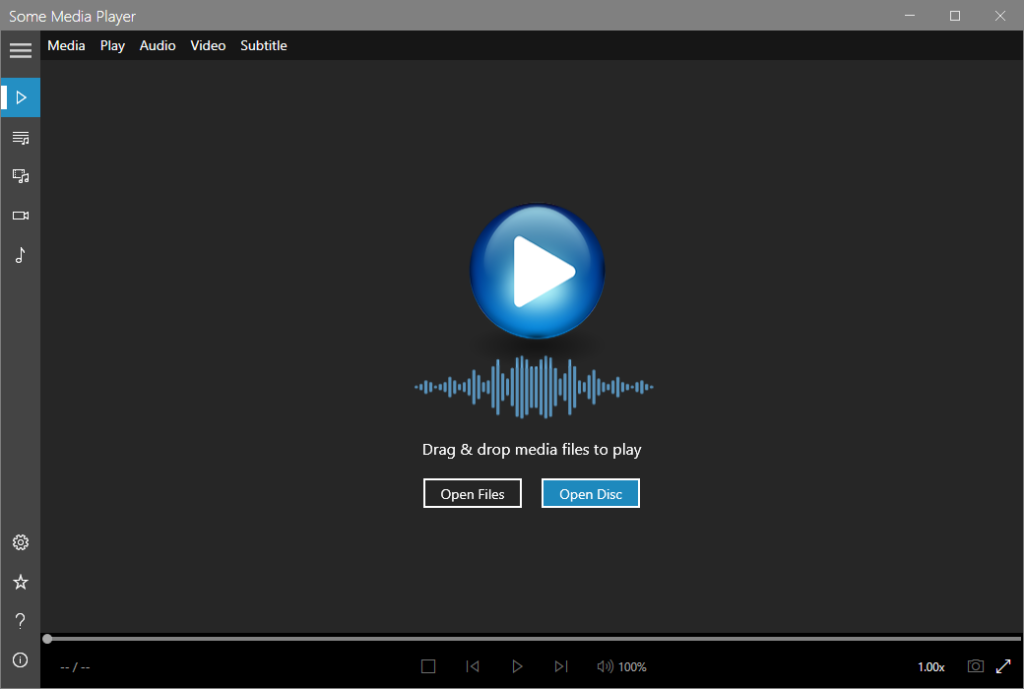
Main Features

  • Play DVD
  • Play Blu-ray
  • Play VCD and Audio CD
  • Playlists
  • Play media files

Supported File Formats

Video formats: MPEG-1/2, DivX® (1/2/3/4/5/6), MPEG-4 ASP, XviD, 3ivX D4, H.261, H.263 / H.263i, H.264 / MPEG-4 AVC, Cinepak, Theora, Dirac / VC-2, MJPEG (A/B), WMV 1/2, WMV 3 / WMV-9 / VC-1, Sorenson 1/3, DV, On2 VP3/VP5/VP6, Indeo Video v3 (IV32), Real Video (1/2/3/4).

Audio formats: MPEG Layer 1/2, MP3 – MPEG Layer 3, AAC – MPEG-4 part3, Vorbis, AC3 – A/52, E-AC-3, MLP / TrueHD>3, DTS, WMA 1/2, WMA 3, FLAC, ALAC, Speex, Musepack / MPC, ATRAC 3, Wavpack, Mod, TrueAudio, APE, Real Audio, Alaw/µlaw, AMR (3GPP), MIDI, LPCM, ADPCM, QCELP, DV Audio, QDM2/QDMC, and MACE.
How to Play a DVD/ Blu-ray Disc/ VCD/Audio CD?

There are two ways to play a DVD/ Blu-ray Disc/ VCD/Audio CD disc in Some Media Player.
Note: Some Media Player automatically plays your disc in the optical drive when it starts.
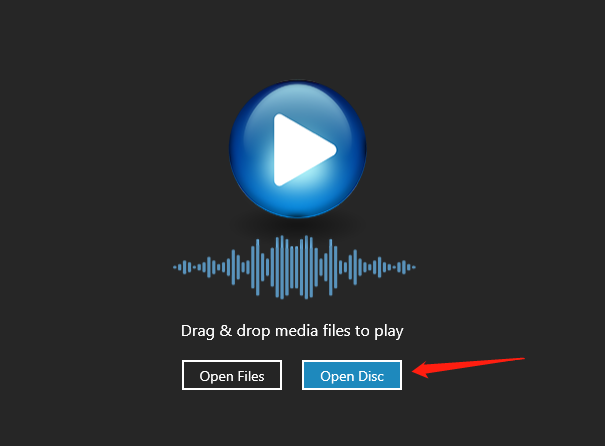
Method 1: click the button “Open Disc” as shown below, then choose one Optical drive listed and click the button “Select folder”.

Sponsored Links

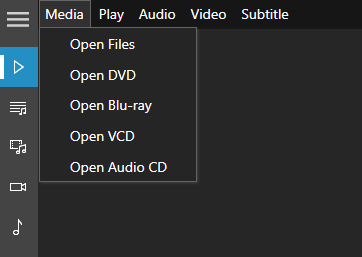
Method 2: in the Player, select the menu “Media”, then “Open DVD”, “Open Blu-ray”, “Open VCD” or “Open Audio CD”.

How to use Local Media Libraries?

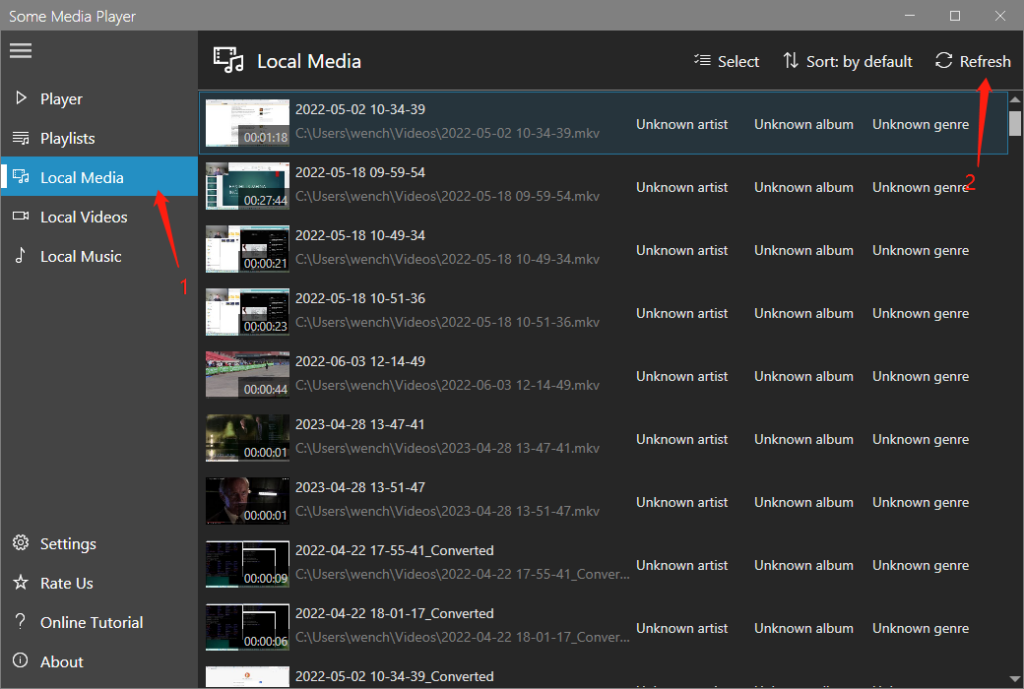
Local media libraries include Local Media, Local Videos and Local Music.

The first time when you open the “Local Media”, the app will automatically scan your device to get all the media files, then all those files will appear in “Local Media”, and “Local Videos” or “Local Music”.

You can also update your local media libraries by clicking the “Refresh” button.

What can you do with the media files in the libraries?

With the media files listed in the libraries, you can:

  1. Add them to a Playlist one by one by right-clicking on them.
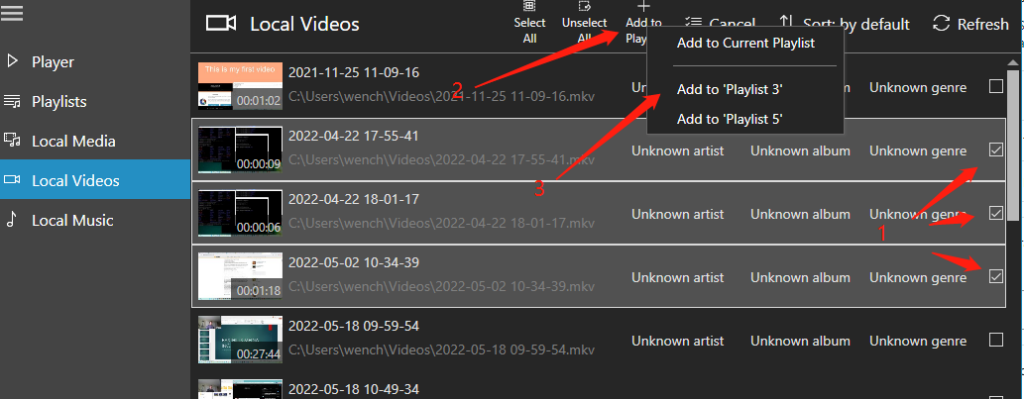
  2. Multi-select them by clicking the button “Select”, and then add them to a Playlist all at once.
  3. Directly play this media file by double-clicking it.

How to directly play a media file from the local media libraries?

Double-click it.

Playlists

Some Media Player provides you the ability to create as many playlists as you want. You can create a playlist, maintain the media files in the playlist and play the playlist.

Sponsored Links

The Current Playlist is a built-in playlist that maintains the current media files list to play. You can do any other operations to the Current Playlist as to others, except that you can not remove it. When you double-click a media file in Local Media library to play it, the file is automatically added to the Current Playlist.

How to Create a Playlist?

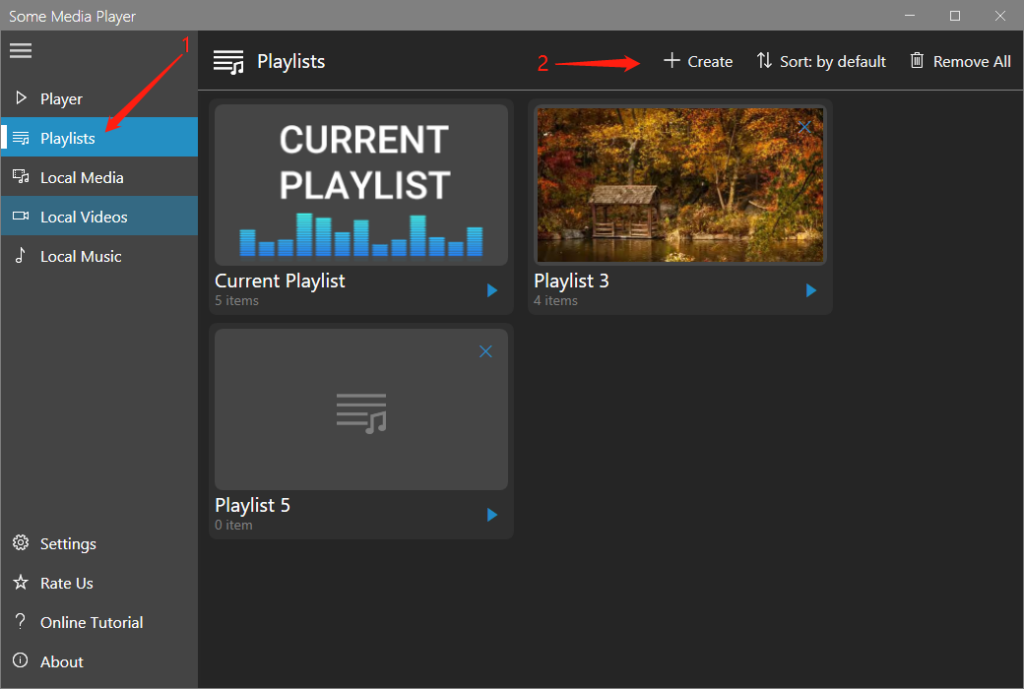
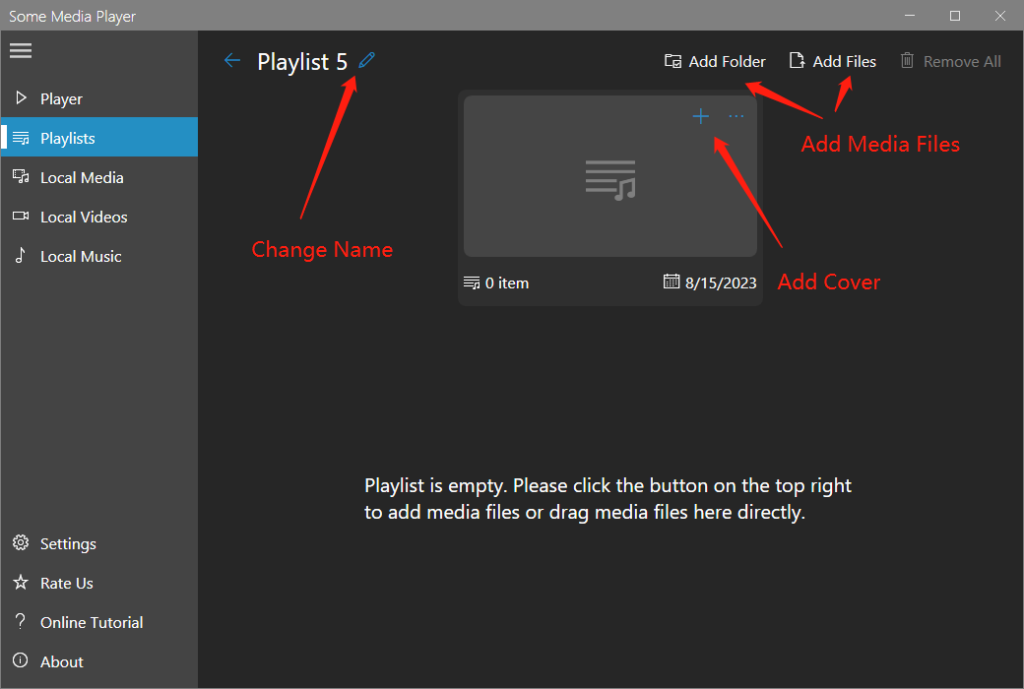
In order to create a new playlist, just click “Playlists” in the left menu bar and then click the “Create” button. A new empty playlist is created. You can change its name, add a cover image, and add media files to it now.

How to Add Media Files to a Playlist?

There are two methods to add media files to a playlist.

Method 1, use the “Add Folder” or “Add Files” button at the top right section of an opened playlist, as shown above.

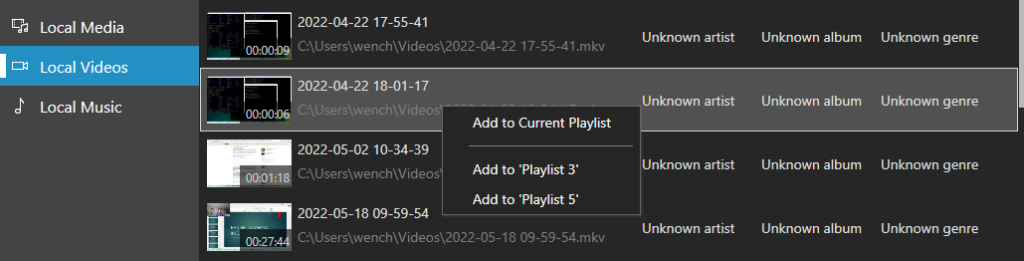
Method 2, use the local media libraries. In “Local Media”, “Local Videos” or “Local Music”, right-click a file and then select “Add to [Playlist Name]”.

Alternatively, in local media libraries, you can click the “Select” button to select multiple media files and add all of them together to a playlist, as shown below.

How to Remove a File from a Playlist?

To remove a file from the playlist, open the playlist, move you mouse above the file that you want to remove. A cross button will appear at the right end of the row. Click the cross button to remove it from the playlist.

Sponsored Links

How to Remove All Files from a Playlist?

To remove all files from the playlist, open the playlist, then click the “Remove All” button at the right top corner.

How to Remove a Playlist?

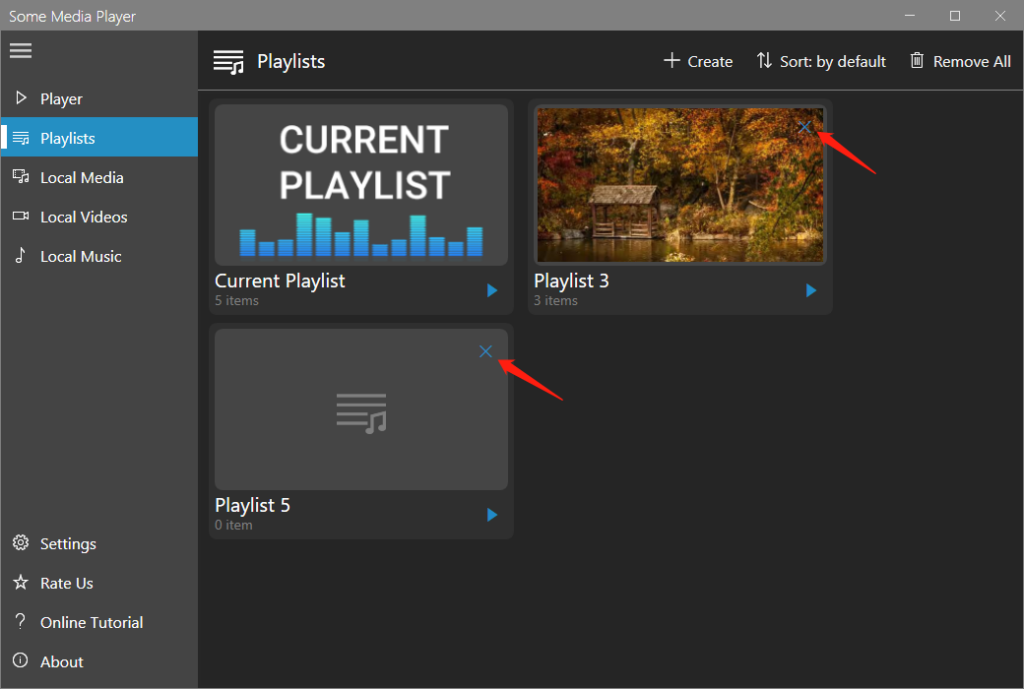
To remove a playlist, first you need to go to the Playlists panel by clicking “Playlists” from the left menu bar. There, you can find a cross button at the right top corner of each playlist except the Current Playlist. Click that cross button to remove that playlist.

How to Play a Playlist?

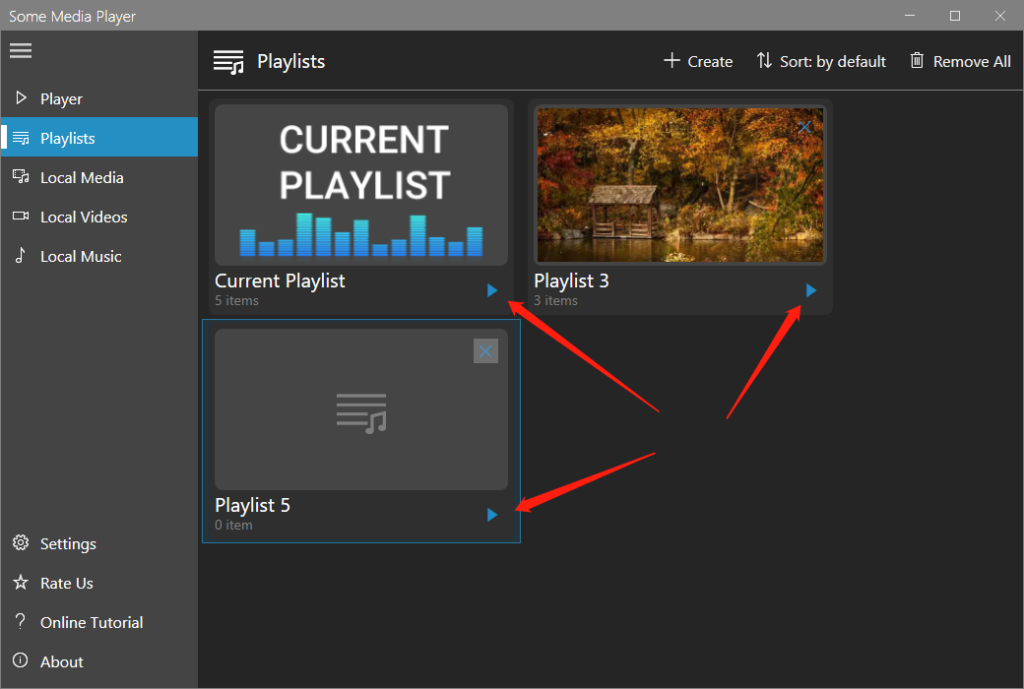
To play a playlist, first you need to go to the Playlists panel by clicking “Playlists” from the left menu bar. There, you can find a blue triangle button at the right bottom corner of each playlist. Click that blue triangle button to play that playlist.

How to Use the Media Player Action Bar – Options & Buttons?

All the player options (Stop, Pause, Play, Previous, Next) and the video’s timeline with a slider to seek forward or backward are on the bottom of the Action Bar.

Sponsored Links

The volume control allows you to adjust the volume from 0% to 200%. You can also use it to mute the media.

The play speed control allows you to adjust the play speed from 0.25x to 32x. It’s also customizable.

The snapshot button allows to take a snapshot of the video and store it in the configured snapshots folder.

The Fullscreen on/off switch is located at the right end of the Action Bar.

How to Use the DVD Navigation Menu?

As shown below, Some Media Player transparently supports the official DVD Navigation Menu, designed by the authors of the DVD Movie in order to support the DVD Playback.
When a DVD starts playing, the app autoloads the DVD menu and display all the options available.
These options (for example, languages, subtitles, scene selection and buttons) are displayed before starting the actual playback. You can select different options before or during watching the playback.

How to Open Settings?

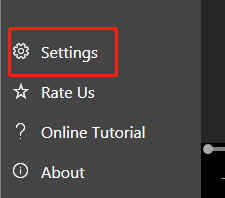
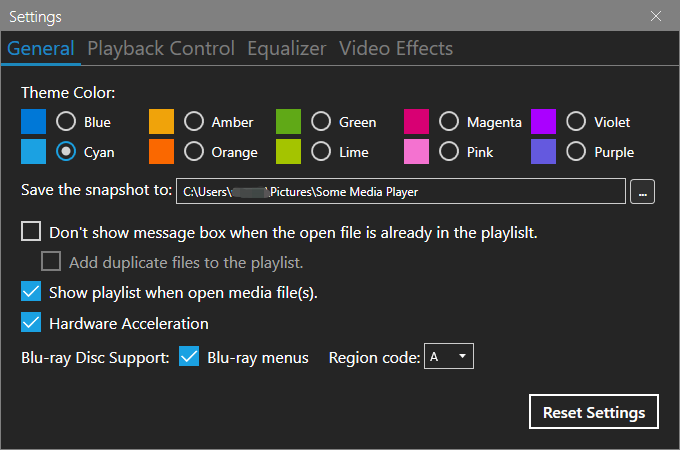
Simply click the button “Settings” to open the Settings window.

Sponsored Links

In the Settings window, you can:

  1. change the theme color
  2. change the snapshot folder
  3. toggle hardware acceleration
  4. change Blu-ray options
  5. and so on.

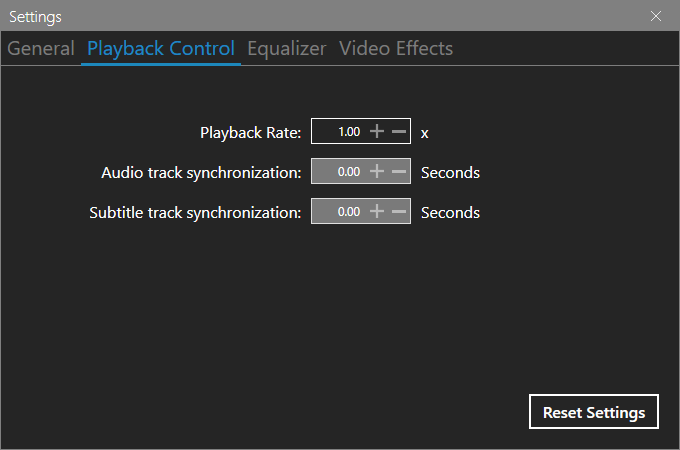
How to Adjust Audio and Subtitle Delay?

If you experience audio and subtitle delay problems when playing your media file, you can use the Playback Control to adjust them and synchronize them with the video.

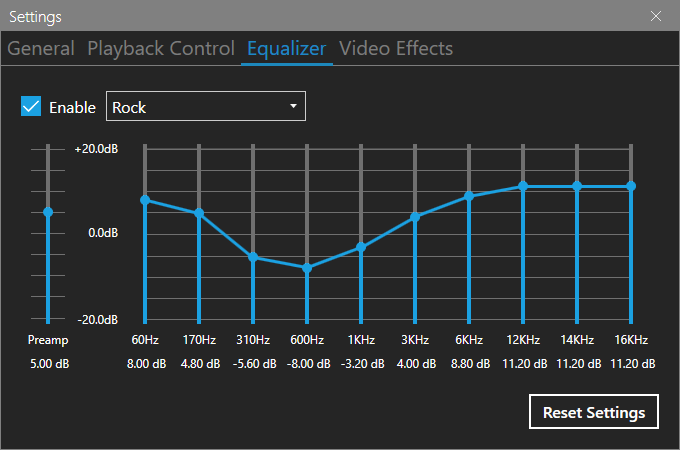
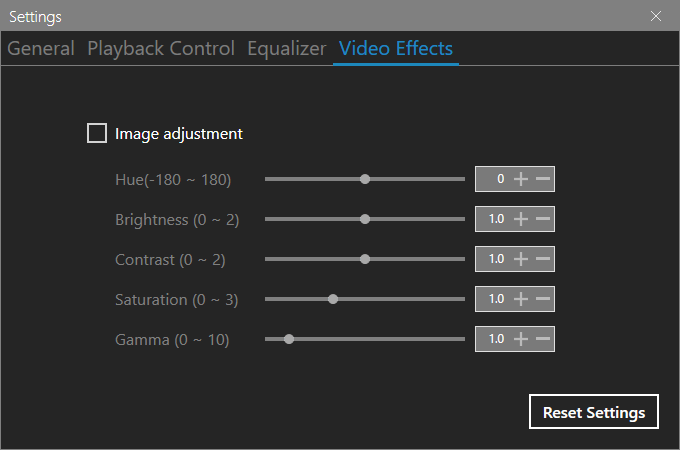
How to Adjust Audio and Video Settings?

You can use Equalizer to adjust audio settings and use Video Effects to adjust video image settings.

E-mail Support

If you have any further questions or feed-backs about the app, please feel free to reach out to us by email. We are here to listen and help.